As large scale businesses navigate a hyper connected digital landscape, standard web functionalities are no longer sufficient to meet complex operational needs. In the context of enterprise web architecture, implementing custom api integrations 2026 has transitioned from a technical preference to an absolute business necessity. Modern corporate platforms must serve as central hubs that communicate seamlessly with a myriad of external databases, customer relationship management (CRM) systems, enterprise resource planning (ERP) platforms, and processing gateways. This article explores the strategic importance of customized application programming interfaces (APIs) and how they drive operational efficiency and growth.
1. Eliminating Data Silos with Unified Architecture
One of the most persistent challenges for large organizations is data fragmentation. Different departments utilize different software solutions, creating isolated data silos. Custom api integrations 2026 address this issue by creating unified digital ecosystems. By engineering custom endpoints, development teams can facilitate real time, bidirectional synchronization between the public website and critical internal systems like Salesforce, SAP, or proprietary database engines.
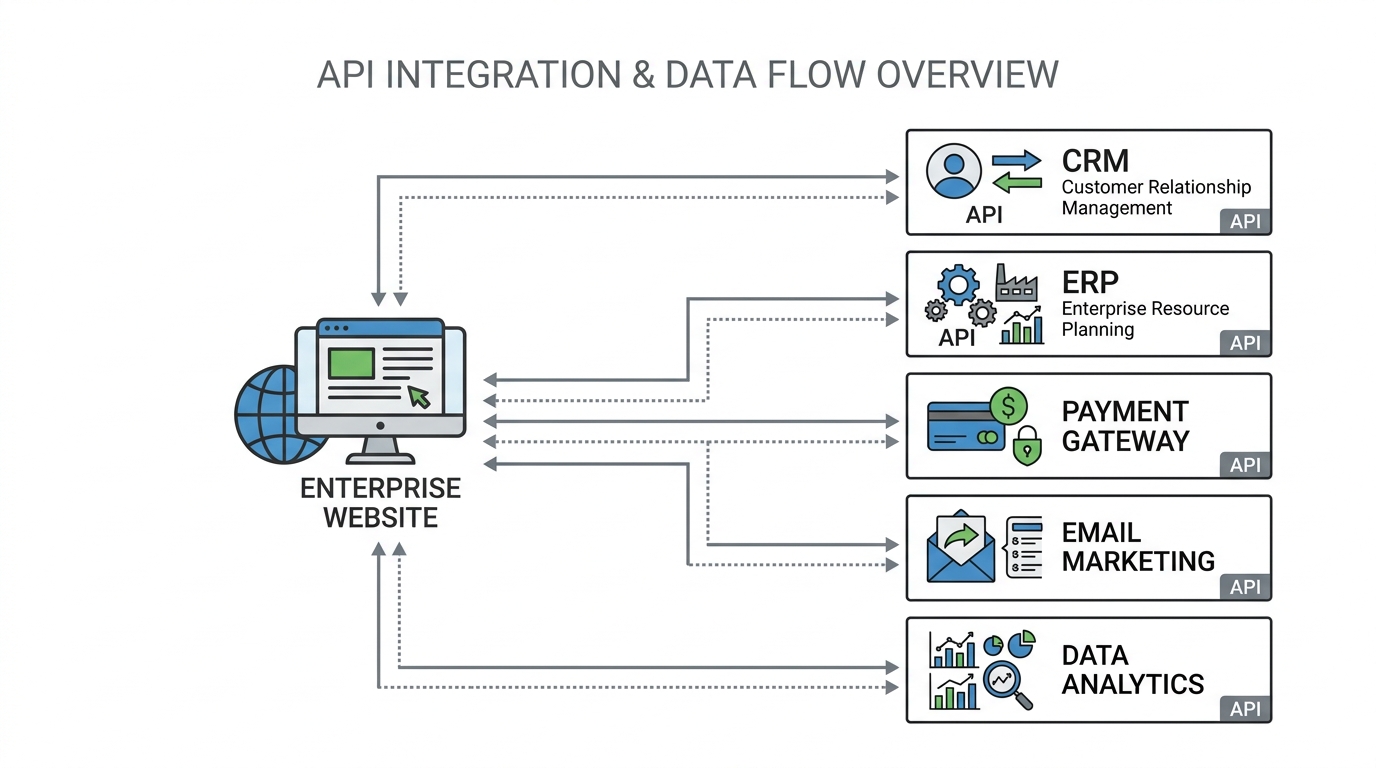
When a prospective customer completes a contact form, schedules a product demonstration, or executes a high value transaction on your site, the data is instantly processed, cleansed, and routed to the appropriate CRM or inventory management tool. This automation completely eliminates the need for manual data entry, reducing human error and ensuring that your sales and operations teams are always working with the most up to date customer information.
2. Enhancing Platform Scalability and Performance
Monolithic enterprise websites that attempt to handle content delivery, transaction processing, user authentication, and data analysis within a single application inevitably face performance issues. Custom APIs enable a decoupled, modular design often referred to as service-oriented architecture (SOA) or microservices. By separating these core functionalities into individual services that communicate via APIs, businesses can scale individual components independently as demand changes.
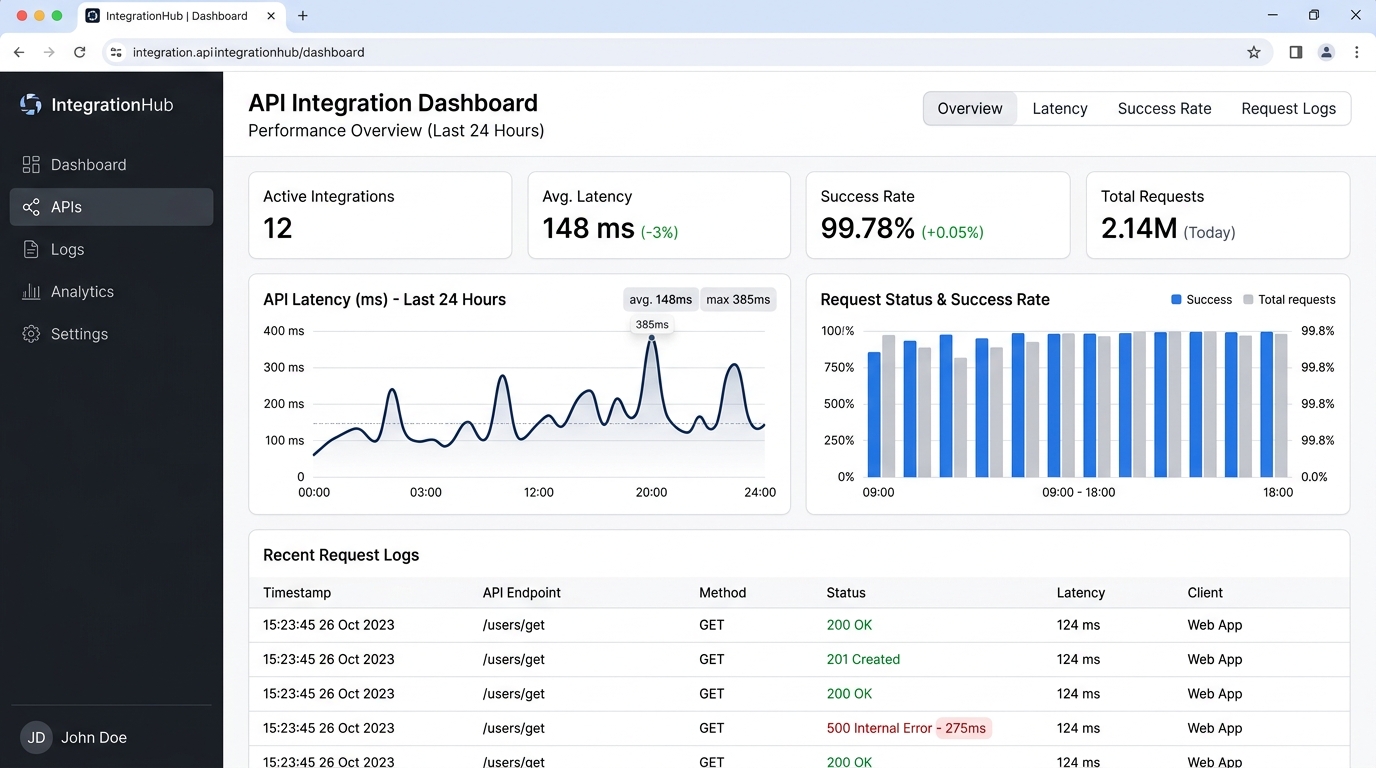
For instance, during a high traffic product launch or marketing campaign, your site can scale its payment processing microservice without needing to duplicate the entire frontend system. Furthermore, using modern custom APIs built with lightweight technologies like Node.js or Go reduces server response times, leading to faster page loads and improved Core Web Vitals, which are vital for search engine rankings.
3. Securing Enterprise Transactions and Sensitive Data
With cyber threats growing increasingly sophisticated, safeguarding sensitive enterprise and customer data is paramount. Off the shelf API plugins often contain generic code that is highly vulnerable to automated exploits. Developing custom api integrations 2026 allows software engineers to implement strict, bespoke security layers tailored to the specific risk profile of the organization.

Custom integrations facilitate the implementation of advanced authentication and authorization protocols, such as OAuth 2.0, JSON Web Tokens (JWT), and multi-factor authentication. By establishing secure, encrypted tunnels for all data transit and implementing strict rate limiting and request validation, businesses can prevent distributed denial of service (DDoS) attacks, SQL injection attempts, and unauthorized data extraction.
4. Delivering Personalized User Experiences
Modern consumers expect highly relevant, personalized digital experiences. To achieve this at scale, enterprise platforms must dynamically aggregate user data from multiple touchpoints. Custom APIs act as the bridge between user facing interfaces and backend intelligence engines. By querying customer history and behavioral analytics in real time, APIs allow websites to dynamically adjust layouts, product offerings, and pricing structures.
For example, a returning enterprise client logging into your B2B portal can be greeted with customized contract pricing, tailored product recommendations, and instant access to their specific account manager—all powered by dynamic API requests. This level of personalization increases user engagement and significantly drives customer lifetime value.
5. Future-Proofing Your Digital Business Strategy
The technological landscape is constantly shifting, with new tools and frameworks emerging regularly. Relying on rigid, pre-built integrations means your business is at the mercy of third-party update schedules. Custom API development provides the agility required to swap out legacy systems for modern alternatives without needing to rebuild the entire website.
Future-Proof Your Digital Presence
Developing and maintaining a secure, performant, and scalable enterprise website requires a development partner with specialized engineering expertise. At Primus Digital Agency, our elite development team specializes in architecting custom api integrations 2026 that drive efficiency, enhance security, and scale operations. We understand that your digital presence is the engine of your business growth. Visit PrimusDigitalAgency.com to schedule a technical consultation and discover how we can optimize your enterprise website architecture today.