In the hyper competitive landscape of enterprise software, your website is often the first and only chance you have to make an impression. Navigating the world of B2B SaaS web design 2026 requires more than just a modern aesthetic; it demands a deep understanding of user psychology, conversion rate optimization, and technical performance. The days of relying on aggressive sales teams to close deals are fading. Today, your website must act as your most efficient, automated sales representative, guiding prospects seamlessly from initial awareness to booking a demo or starting a free trial. In this ultimate best practices guide, we explore the core principles that are separating high growth SaaS companies from the rest of the pack in 2026.
1. The Shift to Product Led Growth Design
The most significant trend dominating B2B SaaS web design 2026 is the complete shift towards Product Led Growth (PLG) design principles. Users no longer want to read endless paragraphs describing what a software might do; they want to see it in action immediately. Your homepage must feature high fidelity, interactive product tours, animated UI mockups, or even playable demo environments directly embedded above the fold. By showing the product immediately, you reduce friction and instantly communicate value.
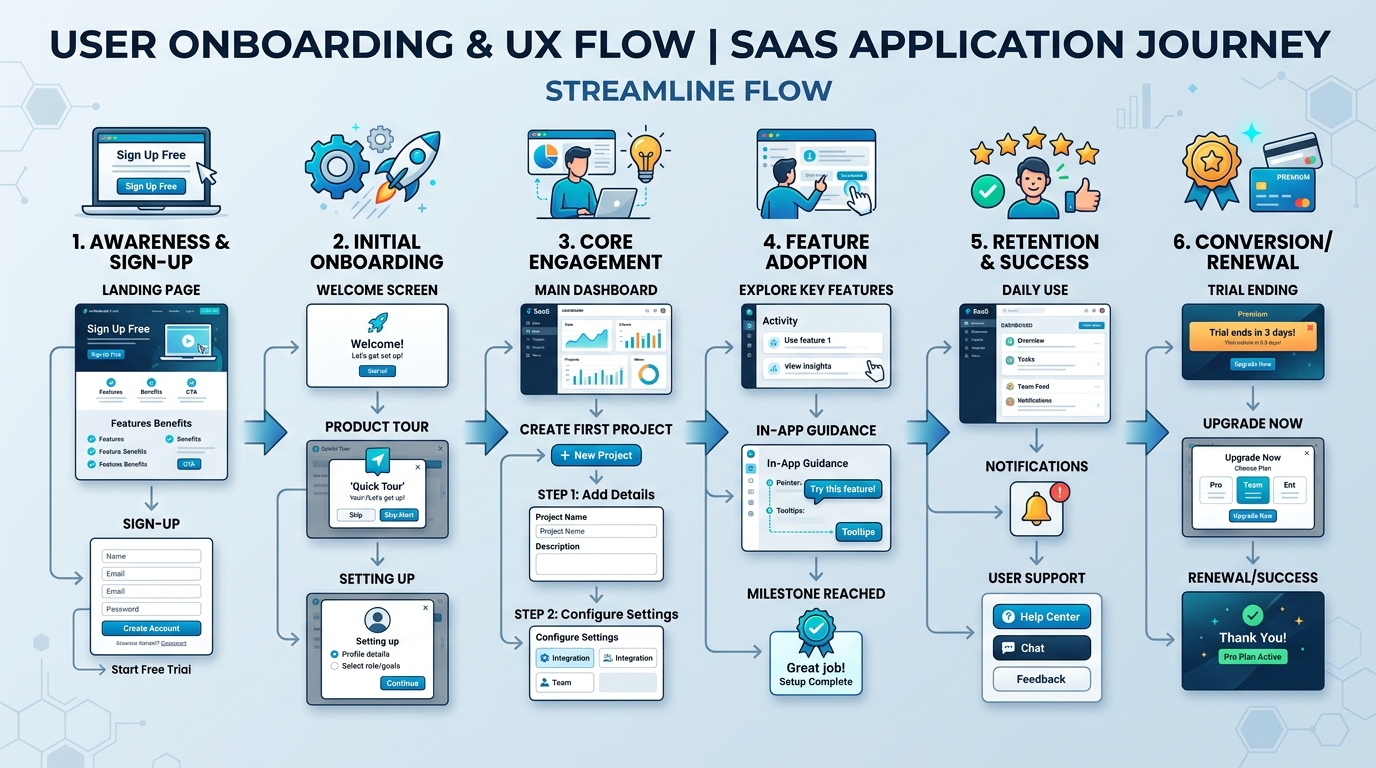
Furthermore, the onboarding process must be entirely frictionless. Long, complex registration forms that require a corporate email, phone number, and company size before granting access are conversion killers. The modern approach utilizes single sign on (SSO) options via Google or Microsoft, allowing users to enter the product in just one click. The goal is to get the user to experience their first “aha!” moment as rapidly as possible, without putting unnecessary barriers in their way.
2. Optimizing the User Experience (UX)
When evaluating B2B SaaS web design 2026, user experience (UX) is paramount. SaaS buyers are often evaluating multiple tools simultaneously; if your site is confusing to navigate, they will bounce to a competitor within seconds. Navigation menus should be highly intuitive, categorizing features by use case or industry rather than internal jargon. A clear, sticky navigation bar ensures that a prominent Call To Action (CTA), such as “Start Free Trial,” is always visible regardless of how far down the page a user scrolls.
Accessibility and dark mode are no longer optional. A significant portion of developers and tech professionals prefer dark interfaces to reduce eye strain. Implementing a seamless toggle between light and dark modes not only improves accessibility but also signals to your audience that your brand is technically progressive and empathetic to user preferences. Modern design libraries like Tailwind CSS make implementing these features standard practice.
3. The Anatomy of a High Converting Pricing Page
The pricing page is arguably the most critical component of B2B SaaS web design 2026. This is where decisions are made. A cluttered, confusing pricing matrix will induce decision paralysis. The best practice is to offer three distinct, clearly differentiated tiers. The middle tier should be highlighted as the “Most Popular” or “Recommended” option, utilizing the psychological principle of the decoy effect to drive conversions towards your target Average Revenue Per User (ARPU).
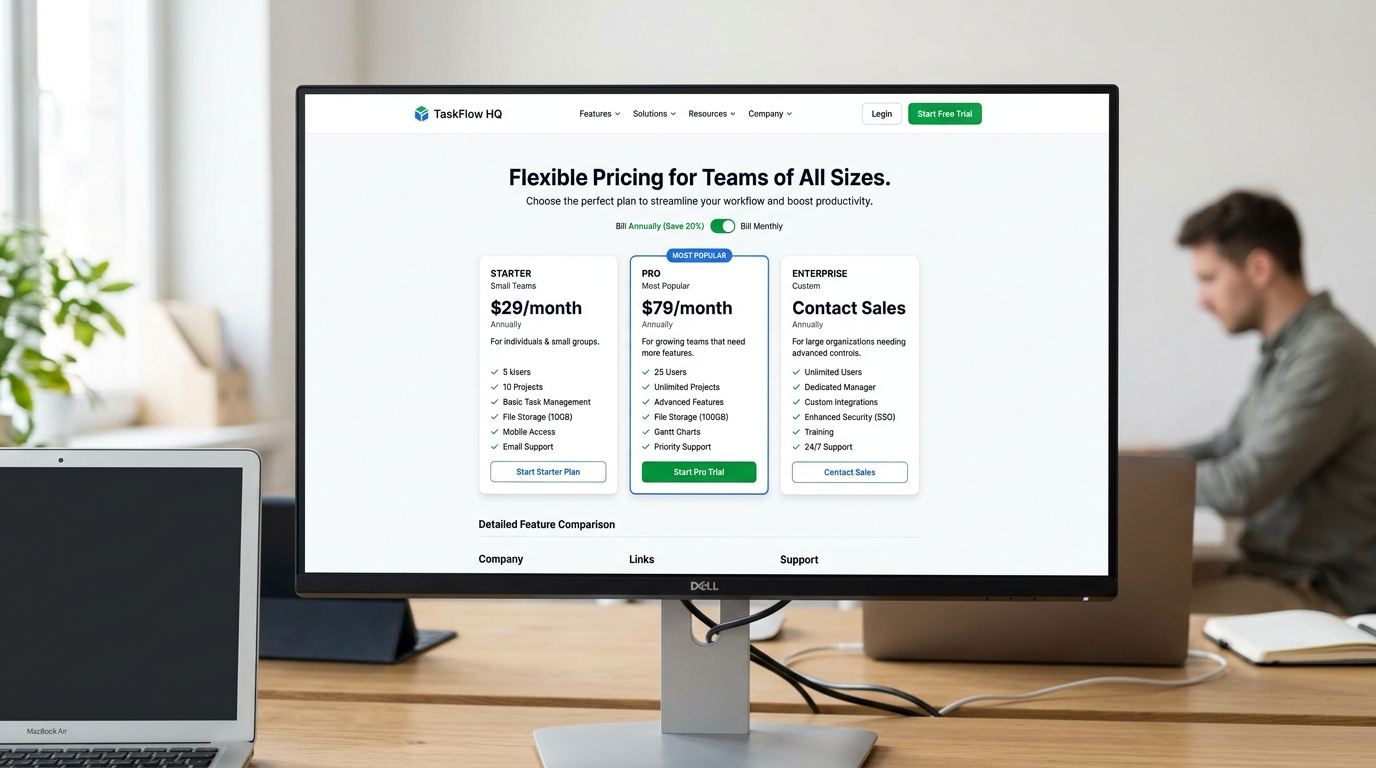
Transparency is key. Avoid hidden fees or “Contact Sales” buttons for basic tiers. Clearly list exactly what features are included in each plan, using simple checkmarks and tooltips to explain complex features without cluttering the UI. Additionally, offering an easy toggle between monthly and annual billing with a clearly stated discount (e.g., “Save 20%”) incentivizes long term commitments and improves cash flow for your business. For inspiration on transparent pricing, refer to industry leaders like Stripe or HubSpot.
4. Building Trust with Strategic Social Proof
In the B2B space, risk aversion is high. Buyers are staking their professional reputations on the software they choose. Therefore, embedding strategic social proof is a fundamental pillar of B2B SaaS web design 2026. Generic, anonymous testimonials are no longer effective. You must utilize rich social proof: video testimonials, detailed case studies with measurable ROI, and logos of well known enterprise clients placed prominently on the homepage and across key landing pages.
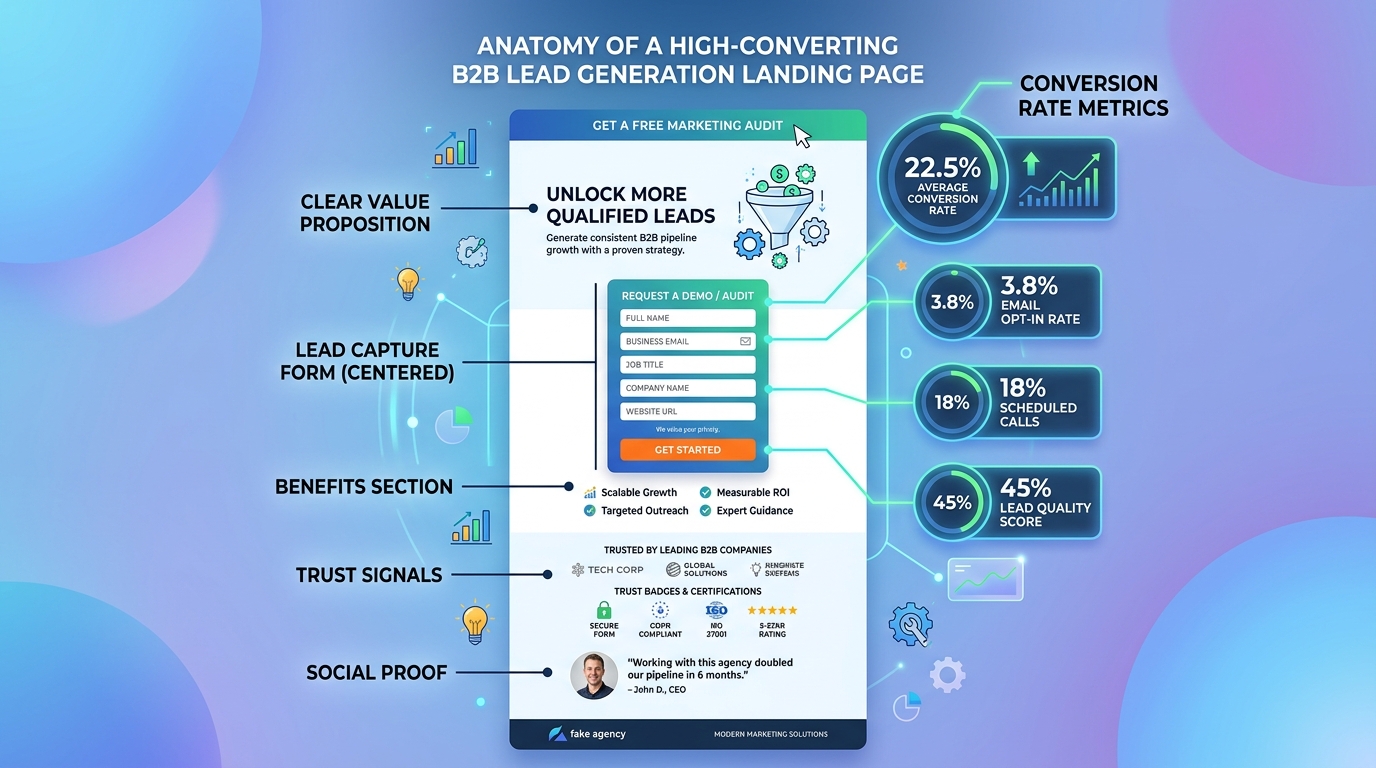
Trust badges regarding data security are also essential. Displaying SOC2 compliance, ISO certifications, and GDPR readiness badges directly in the footer and near the checkout or signup forms alleviates security concerns immediately. According to industry research, visible security certifications can increase enterprise signup rates by over 30%, proving that security is a powerful marketing asset.
5. Technical Performance and SEO Architecture
Beautiful design is useless if the site does not load instantly. The technical foundation of B2B SaaS web design 2026 demands perfect scores in Google Core Web Vitals. This requires a transition to modern, lightweight architectures like headless CMS setups utilizing Next.js or Gatsby. These frameworks allow for static site generation, ensuring that pages load in milliseconds, which drastically reduces bounce rates and improves organic search rankings. Search engines reward fast websites with higher visibility, meaning technical performance directly impacts your bottom line.
Elevate Your SaaS Brand Today
Staying ahead in the competitive software market requires a website that is engineered for performance, optimized for conversions, and designed to build trust. At Primus Digital Agency, we specialize in implementing the definitive B2B SaaS web design 2026 strategies that turn casual visitors into loyal enterprise customers. We understand the unique challenges software companies face and build scalable solutions to accelerate growth. Visit PrimusDigitalAgency.com to schedule a technical audit and discover how our expert team can dramatically scale your user acquisition funnel today.